Untouchable status
The RadleysUntouchable status is the protection granted to selected practicing vampires under an arrangement between the Sheridan Society and the police. It made them difficult for police to pursue in exchange for compliance with rules governing their killings. The system is presented not as equal protection under law, but as a negotiated exception: it helps contain violence and preserve secrecy while leaving abstainers and less notorious vampires without the same shield.
Definition and operation
The Sheridan Society was a collective of practicing vampires that looked after its members. It sent the police a list of untouchables each year; those named on it were protected from police action. Will Radley describes the Society as based in Manchester and compares its mutual protection to a trade union. Its name comes from Sheridan Le Fanu, a long-dead writer of vampire fiction, rather than from a founder or member. Will says he is usually close to the top of the list, an indication of the standing he has held within the arrangement.
The list did not simply establish that vampires existed or that the police knew about them. It organized a working relationship between the authorities and a community the authorities did not want exposed. The police agreed to stay away from listed members, while the Society supplied a channel through which rules and influence could reach them. The result was protection with an institutional purpose: not a declaration that listed vampires were harmless, but a means of managing their conduct without openly bringing the whole vampire community into conflict with the state.
The bargain and its limits
The police described the arrangement as a combination of deterrence and inducement. Their stated aim was to reduce incidents through mutual rules and respect; Alison Glenny later reports that incidents had fallen by nearly half. Rather than rely principally on direct prosecution, the police preferred third-party solutions, especially vampires acting against other vampires. They framed this as a way to serve the greater good and keep the existence of vampires from becoming public knowledge. Public disclosure, Alison warns, would bring severe consequences for a police officer who attempted it, including dismissal and being declared insane.
The arrangement rests on an ethical contradiction the narrative makes explicit. By cooperating with the Sheridan Society, police effectively reward some of the most notorious and bloodthirsty vampires, while abstainers and more moderate vampires remain unprotected. The justification is practical: the police hope that protection will give them leverage over people whose actions they cannot easily control by ordinary means. Yet the leverage is limited by the Society’s own rules and by the members’ willingness to follow them. The system therefore treats protection not as a general entitlement but as a bargaining instrument, distributed selectively among the very people whose violence it is intended to restrain.
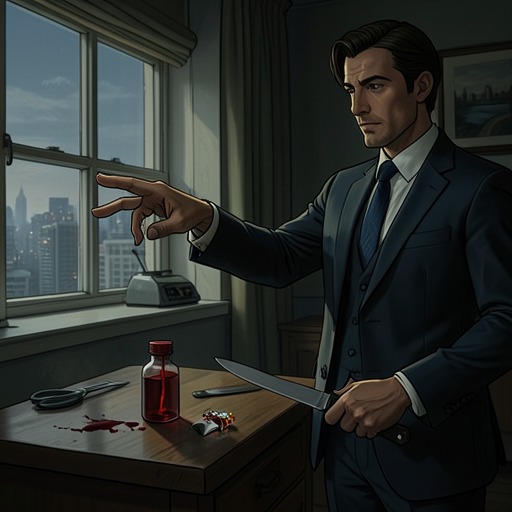
The rules define a killing as acceptable within the arrangement only when it avoids detection on camera, leaves no body to be found, and involves a victim unlikely to attract substantial public sympathy or scrutiny. The approved categories include prostitutes, drug addicts, homeless people, failed asylum seekers, and bipolar outpatients. The rules exclude, among others, the wives of police officers, people met through speed-dating, and checkout workers. This is not an abolition of killing but a framework for making it less visible and politically costly. Its apparent order depends on assigning some victims less public consequence than others.
Will Radley and the list
Will’s position shows both the reach and the fragility of untouchable status. Although a longtime Society member, he has not kept his desires within the Society’s police-endorsed framework. His recent killings have been particularly careless, including conduct that risks being caught on camera, and that sloppiness has placed extra pressure on the Society. Members nevertheless believe that he will be protected because Isobel Child is deeply fond of him. Her popularity in the vampire community, and her brother Otto Child’s role as overseer of the list, reinforce their expectation that Will’s connections will count in his favor.
That expectation changes when Alison Glenny receives a call reporting that Will Radley is off the list. The call comes amid mounting police pressure and concern over his recent conduct. His earlier confidence that he is protected, and that police cannot stop him, is thus exposed as dependent on a status the Society can withdraw. Untouchability is not an inherent quality or permanent immunity: it is a position maintained by institutional consent, and Will’s place on the list can be revoked when his behavior threatens the arrangement.
Narrative significance
The list makes secrecy an active policy rather than mere silence. Police and Society members both manage what can be seen, what can be investigated, and which deaths might force public attention. The distinction between an undiscovered killing and a politically consequential one becomes part of the system’s operating logic. In that respect, the title untouchable names not innocence but insulation: protection from ordinary police intervention granted according to a negotiated classification.
The status also sharpens the contrast between the Radley family’s abstention and the Society’s practice. Peter Radley explains that his family no longer kills or converts people and appears to the outside world as ordinary. That private restraint does not place abstainers under the list’s protection. Instead, the arrangement favors practitioners willing to participate in the Society’s system, even as it claims to curb them. Untouchable status therefore captures the book’s uneasy account of order: institutions may reduce visible harm while preserving a hierarchy that decides whose violence is managed, whose conduct is protected, and whose lives can be treated as expendable.